

Epoxy grout and cement grout are two common types of grout used in tile installations, and we work with both. They have distinct differences in terms of composition, properties, and recommended applications. Here’s a comparison between epoxy grout and cement grout:
- Epoxy Grout:
-
- Epoxy grout is a two-component system consisting of epoxy resin and hardener.
- It contains no cement or lime.
- Cement Grout (Sanded or Unsanded):
-
- Cement grout is made from a mixture of cement, sand, and water.
- Sanded cement grout contains fine sand particles, while unsanded cement grout does not.
Properties:
- Epoxy Grout:
-
- High durability: Resistant to cracking, staining, and wear.
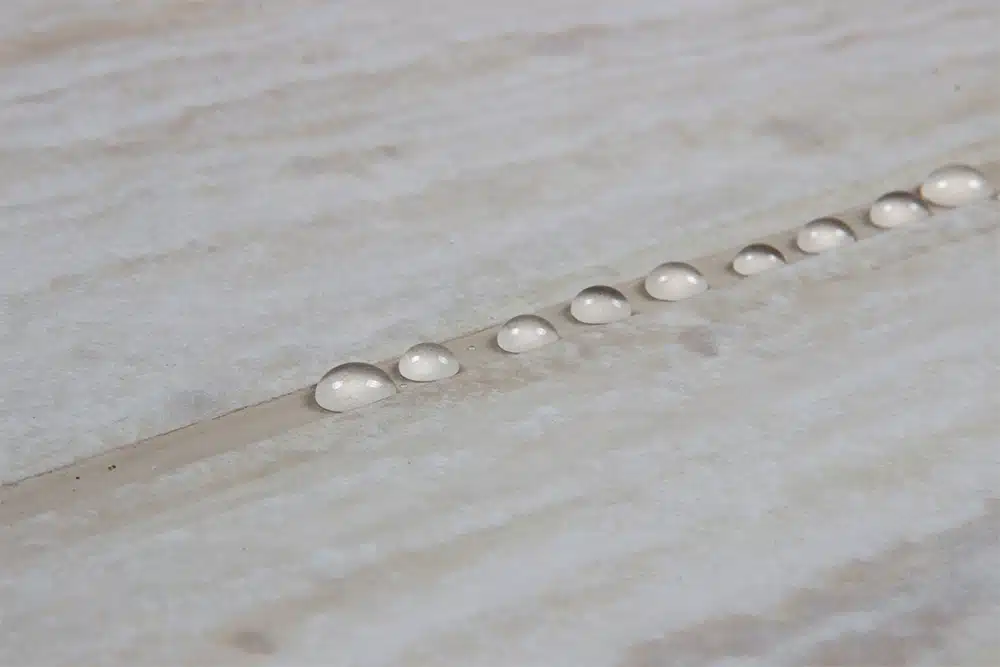
- Excellent moisture resistance: Virtually waterproof.
- Chemical resistance: Resistant to most chemicals and detergents.
- Low porosity: Prevents water and stains from penetrating.
- Stain resistance: Highly resistant to common household stains.
- Non-porous and smooth finish: Easy to clean and maintain.
- Colour consistency over time.
- Cement Grout (Sanded or Unsanded):
-
- Varies in durability: Cement grout can be prone to cracking and staining, especially in high-traffic areas.
- Moisture resistance: Not as moisture-resistant as epoxy grout, and it can absorb water if not properly sealed.
- Moderate chemical resistance: Some cement grout formulations are more resistant to chemicals than others.
- Porous surface: Can be prone to staining and requires sealing to resist stains.
- May require more frequent cleaning and maintenance.
- Colour can fade or change over time, especially in areas exposed to sunlight.
Recommended Applications:
- Epoxy Grout:
-
- Ideal for high-traffic areas like commercial kitchens and industrial settings, for wet areas, such as bathrooms, showers, and swimming pools.
- Excellent for areas where stain resistance and durability are essential.
- Commonly used for outdoor applications and in-floor heating systems.
- Not recommended for areas with excessive movement, as it is less flexible than cement grout.
- Cement Grout (Sanded or Unsanded):
-
- Suitable for most residential tile installations, including kitchens, bathrooms, and living spaces.
- Can be used on both walls and floors.
- A cost-effective option for standard applications.
- Available in a wide range of colours.
- Can be used for both indoor and outdoor applications.
- More flexible than epoxy grout, making it suitable for areas with structural movement.
The choice between epoxy grout and cement grout depends on the specific needs of your tile installation and your Tile Rescue expert will provide their recommendations. Epoxy grout is preferred for areas where durability, moisture resistance, and stain resistance are paramount, while cement grout is a more cost-effective option for standard residential applications. We use our own Tile Rescue Epoxy as well as premium cement grout, call today to discuss your regrouting needs with your local Tile Rescue technician.
